
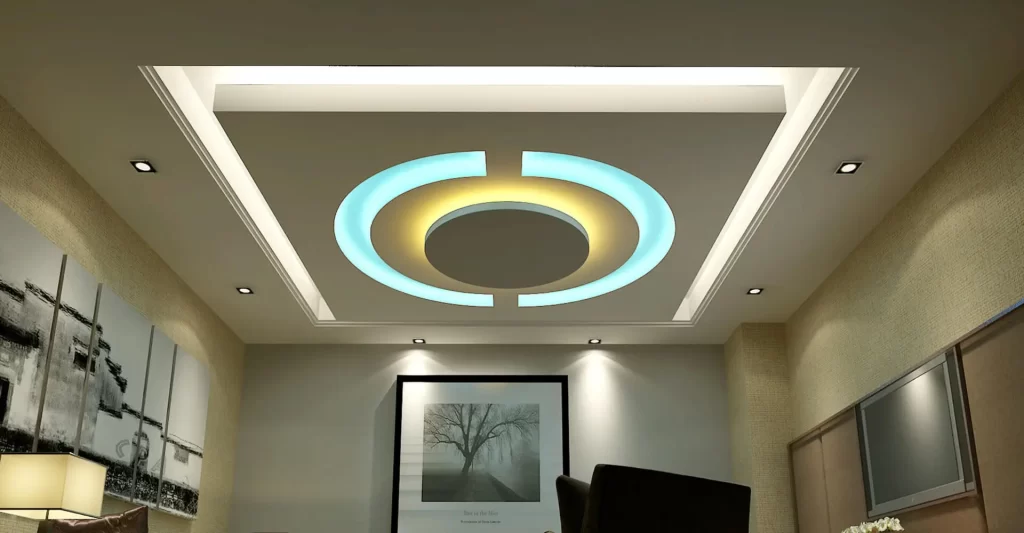
Ceiling work is an important aspect of interior design and construction. It not only enhances the overall look of a room but also plays a crucial role in providing insulation, acoustics, and lighting. There are various types of ceiling work available, and each one has its own advantages and disadvantages. In this article, we will discuss the different types of ceiling work.
Plaster of Paris (POP) Ceiling Work: This type of ceiling work is done using Plaster of Paris, which is a type of building material that is commonly used for creating decorative elements in homes and buildings. POP ceiling work involves creating intricate designs and shapes on the ceiling. It is a popular choice for homes and offices because it is durable, easy to install, and provides excellent sound insulation. However, POP ceiling work is prone to cracking, and it can be challenging to repair.
Gypsum Ceiling Work: Gypsum is a lightweight building material that is widely used for creating ceiling tiles and panels. Gypsum ceiling work involves installing these tiles or panels on a metal frame or grid. Gypsum ceiling work is easy to install, affordable, and provides excellent sound insulation. It is also fire-resistant and durable. However, it is not as decorative as POP ceiling work.
False Ceiling Work: False ceiling work involves creating a secondary ceiling below the primary ceiling. This type of ceiling work is used for concealing unsightly wires, pipes, and ducts. False ceiling work is typically done using gypsum boards, but other materials can also be used. False ceiling work is easy to install, provides excellent insulation, and can be easily removed for repairs or maintenance.
Wooden Ceiling Work: Wooden ceiling work involves installing wooden panels or planks on a metal frame or grid. This type of ceiling work provides excellent insulation, and it can give a room a warm and cozy look. Wooden ceiling work is durable, but it can be prone to warping, cracking, and rotting if not properly maintained.
Metal Ceiling Work: Metal ceiling work involves installing metal tiles or panels on a metal frame or grid. This type of ceiling work is popular in commercial buildings because it is durable, easy to install, and provides excellent sound insulation. Metal ceiling work is also fire-resistant and requires minimal maintenance. However, it can be expensive compared to other types of ceiling work.
Acoustic Ceiling Work: Acoustic ceiling work is designed to absorb sound and reduce noise levels in a room. This type of ceiling work is typically done using materials that have high sound absorption properties, such as mineral wool or fiberglass. Acoustic ceiling work is commonly used in theaters, recording studios, and other environments where sound quality is critical.
In conclusion, there are various types of ceiling work available, and each one has its own advantages and disadvantages. When choosing a type of ceiling work, it is important to consider factors such as durability, insulation, acoustics, and aesthetics. Working with a professional contractor can help ensure that the chosen type of ceiling work is installed properly and meets the desired specifications.
