
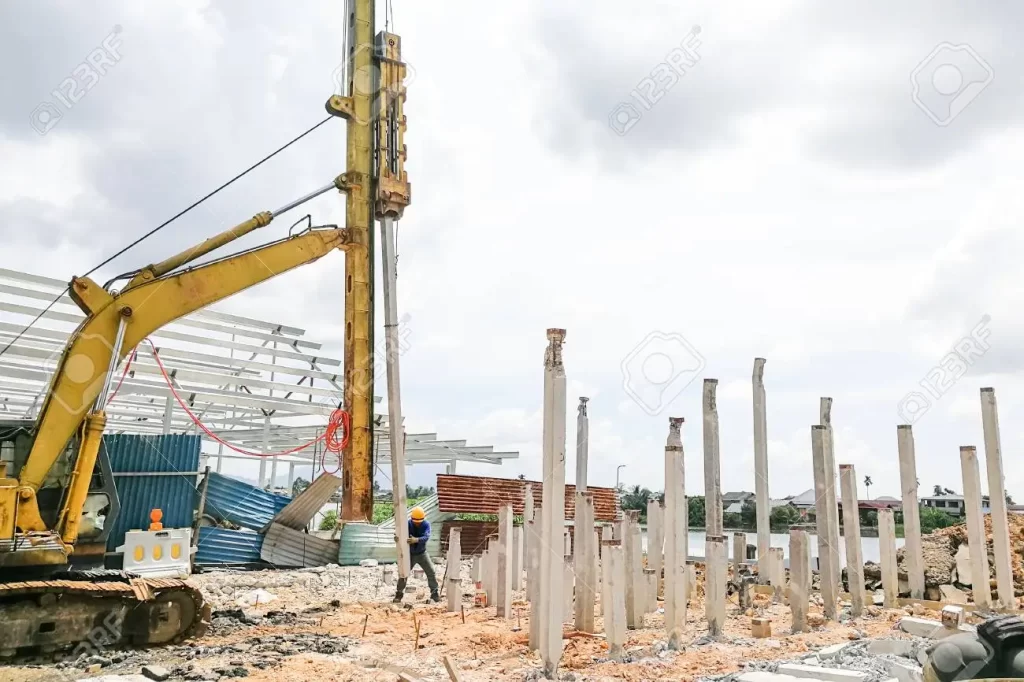
Piling work is a fundamental aspect of construction that involves creating a strong and stable foundation for buildings, bridges, and other structures. Piling is the process of installing long, cylindrical pillars, known as piles, deep into the ground to support the weight of a structure and transfer it to a stronger soil or rock layer. Piling work is critical for ensuring the structural stability and safety of a building or other structure, especially in areas with unstable soil or seismic activity.
The process of piling work involves several steps. First, the ground is excavated to expose the soil or rock layer where the piles will be installed. Next, a steel or concrete pile is driven into the ground using a hydraulic hammer or vibrator. Piles are typically installed to a depth that reaches a stronger soil or rock layer, ensuring that the structure is supported by a solid foundation. The piles are then capped with a concrete or steel cap to ensure that the weight of the structure is evenly distributed across the piles.
There are several different types of piles that can be used for piling work, depending on the soil conditions and the requirements of the project. The most common types of piles include:
Steel H-piles: These piles are made of steel and are driven into the ground using a hydraulic hammer. They are typically used for structures with heavy loads or in areas with soft or unstable soil.
Concrete piles: These piles are made of reinforced concrete and are either precast or cast in place. They are typically used for structures with moderate to heavy loads.
Timber piles: These piles are made of wood and are typically used for smaller structures or in areas with low soil capacity.
Micropiles: These small diameter piles are typically used for underpinning or in areas with limited access.
Piling work requires specialized equipment and expertise. Hydraulic hammers, vibrators, and other heavy machinery are used to drive the piles into the ground, while surveying equipment and soil testing are used to ensure that the piles are installed to the correct depth and angle. Piling contractors must have a deep understanding of the soil conditions and the requirements of the project to ensure that the piling work is completed safely and efficiently.
Piling work can be expensive, especially for large projects that require many piles. However, the cost of piling work is often offset by the benefits of a strong and stable foundation, which can prevent structural damage and ensure the safety of the occupants of the building or other structure.
In addition to its use in construction, piling work can also be used for geotechnical engineering and environmental remediation. Piles can be used to stabilize slopes, reinforce retaining walls, and prevent erosion. Piling work can also be used to remediate contaminated soil or groundwater by installing piles with a grout or slurry that reacts with the contaminants and prevents them from spreading.
In conclusion, piling work is an essential aspect of construction that involves creating a strong and stable foundation for buildings, bridges, and other structures. Piling work requires specialized equipment and expertise, and the type of piles used depends on the soil conditions and the requirements of the project. Although piling work can be expensive, it is necessary to ensure the structural stability and safety of a building or other structure, especially in areas with unstable soil or seismic activity.
